zh-cn
  • sns01-1
  • sns04-1
  • sns02-1
Leave Your Message

Top 10 Filtration Cartridge Manufacturers for Global Buyers

Choosing a Filtration Cartridge supplier is not a simple price comparison. Global buyers must examine material quality, pore-size accuracy, flow performance, manufacturing consistency, and technical support. A cartridge may look identical on a specification sheet, yet perform differently under pressure, temperature, or chemical exposure.

Dr. Mark R. Wiesner, a respected membrane-filtration researcher, has emphasized a practical principle: “Performance depends on more than the membrane alone.” That observation also applies to cartridge filtration. Housing design, sealing, installation, maintenance, and process conditions can change the final result. This guide evaluates ten leading Filtration Cartridge manufacturers through those real-world factors. It considers product range, production capability, certifications, customization, delivery reliability, and documented industry experience.

The selection is intended for water treatment, food processing, pharmaceuticals, chemicals, electronics, and industrial manufacturing. Some manufacturers excel in high-purity applications. Others offer stronger solutions for heavy-duty liquid filtration or large-volume operations. Buyers should still verify current certificates, test data, and regional service coverage before signing a contract. No ranking is perfect.

A supplier with impressive technology may lack responsive support. A lower-cost cartridge may create higher replacement expenses. Small details matter, such as a warped end cap, an uncertain gasket material, or a delayed shipment. Those details can stop a production line.

This overview provides a practical starting point, not a substitute for validation. Compare samples where possible. Ask difficult questions. The best manufacturer is the one that matches your process, risk level, and long-term operating needs.
Top 10 Filtration Cartridge Manufacturers for Global Buyers

Filtration Cartridge Market Scope: Formats, Media, and ISO 16889 Ratings

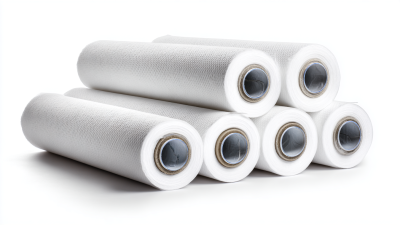
Filtration cartridge selection starts with format, not a catalogue ranking. Common designs include pleated, depth, melt-blown, membrane, bag-style, and spin-on cartridges. Pleated elements provide more surface area and often support higher flow. Depth media hold particles through a thicker structure. However, they may create greater pressure loss as contamination builds. Housing length, diameter, connection type, and seal material must match the existing system.

Media choice depends on fluid chemistry, temperature, viscosity, and target particles. Polypropylene suits many general liquid applications. Glass fiber can offer high dirt-holding capacity and fine particle control. Cellulose may be economical, but it needs careful compatibility checks. Membrane media can support tighter retention, although fouling may occur faster. A cartridge that looks efficient on paper can perform poorly with waxy fluids or fluctuating flow.

ISO 16889 uses a multi-pass test to evaluate particle removal through beta ratios. A rating of β5(c) = 2000 indicates approximately 99.95% removal at the tested five-micron particle size. The “c” notation identifies the calibrated test particle method. These ratings are valuable, but they are not universal guarantees. Real systems contain mixed particle sizes, vibration, temperature changes, and uneven loading. A higher beta ratio is not automatically the best purchase. It may increase cost or pressure drop. Buyers should request test conditions, initial pressure loss, flow curves, and compatibility data. Small omissions matter. Personally, I would treat any rating without operating context as incomplete evidence.

Top 10 Manufacturers Compared by Micron Ratings, Flow Rates, and β-Ratios

Top 10 Filtration Cartridge Manufacturers for Global Buyers

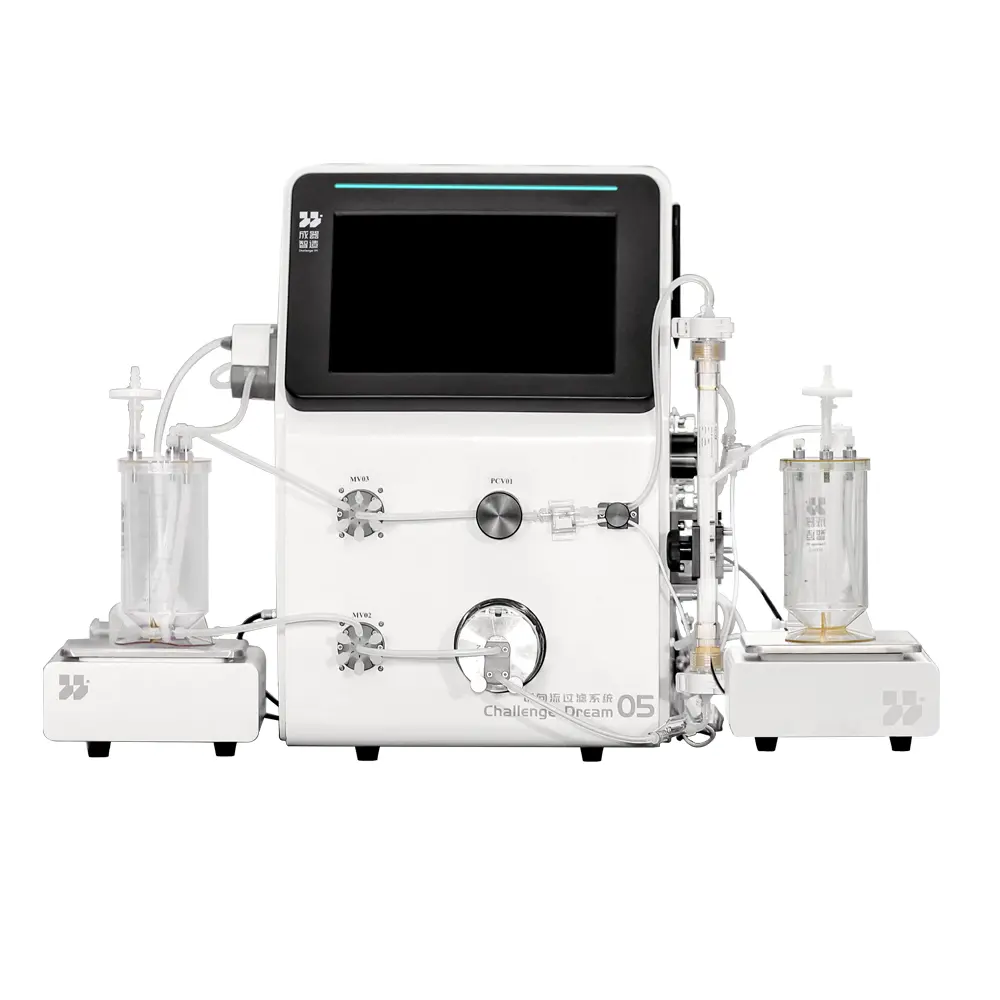
For global buyers, micron ratings provide only a starting point. The top ten manufacturers should be compared under identical test conditions, including fluid viscosity, pressure, temperature, and cartridge size.

ISO 16889:2022 uses a multipass test to evaluate filter performance and beta ratios. A β5 rating means the filter removes particles at a defined size with a 5:1 particle-count ratio, or 80% efficiency. A β1000 rating indicates 99.9% efficiency under that test condition.

Flow rate requires equal attention. A cartridge rated at 100 litres per minute may achieve that figure with clean water and low differential pressure. Real process fluids can behave differently. Viscosity, dirt loading, and housing design often reduce practical flow.

The 2024 Global Water Intelligence market review identifies rising treatment demand, but market growth does not prove equal cartridge performance. Buyers should request pressure-drop curves, not only headline flow numbers. Small details matter.

Look for test certificates, batch traceability, and replacement intervals. A cartridge with finer nominal filtration may clog sooner than a slightly coarser absolute-rated option. That trade-off can increase maintenance costs.

“Micron” is not a universal performance language. Some ratings are nominal, while others follow absolute or multipass methods.

I would also question unusually high β-ratios without the test fluid and particle distribution. Comparisons remain imperfect, especially when manufacturers publish different standards.

Global Manufacturer Profiles: Product Portfolios, Certifications, and Facilities

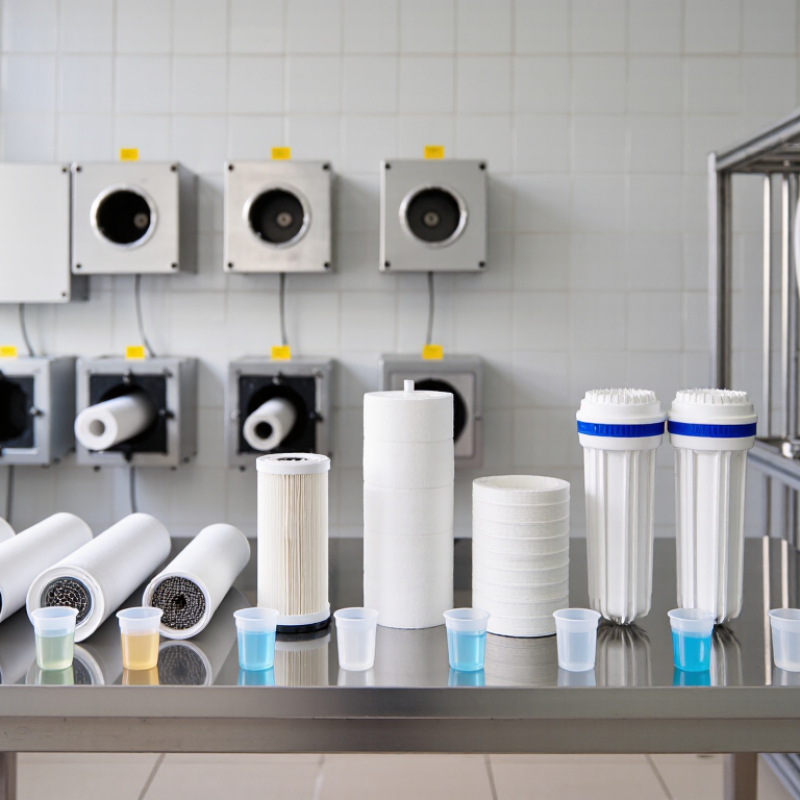
Choosing among the top 10 filtration cartridge manufacturers requires more than comparing catalog prices. Global buyers should examine product portfolios, certifications, and production facilities. A reliable profile includes cartridge materials, pore ratings, flow ranges, and housing compatibility. It should also explain testing methods, not merely display technical claims.

Experienced manufacturers usually offer melt-blown, pleated membrane, activated carbon, and high-temperature cartridges. Some provide custom lengths, end caps, and gasket materials for demanding applications. Look for documented quality systems, batch traceability, and certificates relevant to the destination market. Facility details matter too. Clean assembly rooms, automated welding lines, and in-house integrity testing can reduce inconsistent performance. Still, certification alone is not proof of field reliability. Supplier audits and sample trials remain necessary.

Tips: Request recent certificates and test reports. Ask for production photographs or a virtual factory tour. Confirm whether reported flow rates use the same liquid and pressure conditions as your process. Check replacement availability before signing a long-term agreement. A small pilot order can reveal packaging weaknesses, dimensional variation, or unclear technical support. Do not ignore these details. They often become expensive later. Profiles may look complete, yet some omit failure data or service limitations. That gap deserves direct questions, even when the supplier seems experienced.

Performance Metrics: Dirt-Holding Capacity, Pressure Drop, and Removal Efficiency

Top 10 Filtration Cartridge Manufacturers for Global Buyers

Dirt-holding capacity shows how much contaminant a cartridge retains before replacement. It matters in dusty process water, cooling loops, and pre-treatment lines.

A laboratory value helps, but field conditions can differ sharply. Ask for test data using your actual particle type and concentration.

A cartridge rated at 20 grams may perform poorly against sticky oils or irregular fibers. That detail is often missed.

Pressure drop measures resistance as fluid moves through the media. Record the initial pressure at the specified flow rate, then monitor its rise during service.

For example, a reading of 0.15 bar may become 0.8 bar after several hours. That increase can overload pumps and reduce production stability.

Removal efficiency should include particle size, test method, and sampling location.

“99% efficient” means little without those details.

Independent validation strengthens technical claims, especially for critical water systems. Still, no test perfectly mirrors every installation.

Temperature, viscosity, seal quality, and uneven loading can change results.

Buyers should compare complete performance curves, not isolated percentages.

Keep operating records. They reveal whether a cartridge saves labor or only appears inexpensive.

Buyer Selection Criteria: NSF/ANSI 42, NSF/ANSI 61, Cost, and Supply Continuity

Top 10 Filtration Cartridge Manufacturers for Global Buyers

Buyer Selection Criteria: NSF/ANSI 42, NSF/ANSI 61, Cost, and Supply Continuity

Selecting among the top ten filtration cartridge manufacturers requires more than comparing prices. Verify the exact cartridge model, not only the manufacturer’s certificate. NSF/ANSI 42 generally addresses aesthetic effects, such as chlorine taste, odor, and particulate reduction. NSF/ANSI 61 evaluates materials that contact drinking water. Certification scope matters.

Ask for current certificates, test reports, and production records. Check whether the certificate covers the complete cartridge, housing, seals, and adhesives. A missing component can create a serious compliance gap. Request samples from the same production line. Then test flow rate, pressure drop, leakage, and service life under your water conditions.

Cost needs a wider lens. Compare cartridge price, freight, replacement frequency, labor, disposal, and storage space. A cheaper unit may become expensive after repeated changes. Supply continuity deserves equal attention. Review monthly capacity, lead times, backup facilities, raw material sources, and emergency allocation procedures. Keep at least one approved alternative when possible.

Do not trust spreadsheets alone.

A useful supplier should explain limitations clearly. Ask how performance changes with sediment loading, temperature, and pressure. Some evaluations remain too theoretical. Real water is rarely cooperative. A small pilot run, documented acceptance criteria, and quarterly delivery reviews can expose weaknesses before a full-scale purchase. Even experienced buyers miss this step.

Top 10 Filtration Cartridge Manufacturers for Global Buyers — Buyer Selection Criteria: NSF/ANSI 42, NSF/ANSI 61, Cost, and Supply Continuity
Rank Manufacturer Profile Core Cartridge Types Typical Micron Range NSF/ANSI 42 Position NSF/ANSI 61 Position Typical Unit Cost Range
(USD, ex works)
Standard MOQ Typical Production Lead Time Supply Continuity Indicator Best-Fit Buyer Application
1 Manufacturer Profile 01 String-wound, polypropylene sediment, carbon block 0.5–100 µm Commonly available Model-specific verification $0.90–$7.50 500–1,000 pcs 3–6 weeks ★★★★★
Multi-line production and standard sizes
High-volume residential and commercial replacement programs
2 Manufacturer Profile 02 Pleated polyester, pleated polypropylene, depth media 0.2–100 µm Commonly available Model-specific verification $1.20–$12.00 300–800 pcs 4–7 weeks ★★★★☆
Good standard-product availability
Pre-filtration, food-service water systems, and light industry
3 Manufacturer Profile 03 Granular activated carbon, carbon block, catalytic carbon 1–20 µm nominal Commonly available Verify material compliance $2.50–$18.00 200–600 pcs 4–8 weeks ★★★★☆
Stable supply with media availability planning
Chlorine, taste, odor, and selected organic-contaminant reduction
4 Manufacturer Profile 04 High-flow melt-blown polypropylene and graded-density cartridges 1–100 µm Portfolio-dependent Model-specific verification $0.70–$6.50 1,000–3,000 pcs 3–5 weeks ★★★★★
Strong capacity for repeat standard orders
Industrial pre-treatment and high-throughput sediment removal
5 Manufacturer Profile 05 Membrane-protection filters, ultrafiltration, hollow-fiber modules 0.01–1 µm nominal Limited by product type Verify complete assembly $8.00–$55.00 100–300 pcs 6–10 weeks ★★★★☆
Technical products usually require forecast orders
Ultrafiltration pre-treatment and microbiological barrier systems
6 Manufacturer Profile 06 Stainless-steel mesh, sintered metal, reusable industrial elements 1–200 µm Generally not the primary standard Material and assembly verification $18.00–$160.00 20–100 pcs 6–12 weeks ★★★☆☆
Longer cycle times but suitable for engineered orders
Hot liquids, chemicals, compressed air, and demanding process service
7 Manufacturer Profile 07 Membrane cartridge, reverse-osmosis pre-filter, composite media 0.1–20 µm nominal Selected models only Verify wetted components $3.00–$32.00 300–1,000 pcs 5–9 weeks ★★★★☆
Moderate-to-strong continuity for standard dimensions
Reverse-osmosis systems, drinking-water equipment, and OEM assemblies
8 Manufacturer Profile 08 Specialty carbon, ion-exchange, arsenic and fluoride reduction media 0.5–10 µm nominal Claim-dependent Verify media and housing materials $6.00–$45.00 100–500 pcs 6–12 weeks ★★★☆☆
Media sourcing can affect replenishment cycles
Targeted contaminant reduction and point-of-use treatment
9 Manufacturer Profile 09 Large-diameter pleated and high-flow depth cartridges 1–75 µm Application-dependent Verify full product configuration $12.00–$95.00 50–250 pcs 5–10 weeks ★★★★☆
Reliable when annual demand is forecast
Municipal, food and beverage, and high-flow process filtration
10 Manufacturer Profile 10 Private-label standard cartridges and custom-labeled assemblies 0.5–100 µm Available for qualifying models Verify certification scope $0.80–$10.00 1,000–5,000 pcs 4–8 weeks ★★★☆☆
Continuity depends on tooling, labels, and forecast accuracy
Distributor programs, retail packaging, and recurring OEM supply

Buyer note: NSF/ANSI 42 generally addresses aesthetic effects such as chlorine, taste, odor, and particulates, while NSF/ANSI 61 addresses health-related effects from materials and components that contact drinking water. Certification is model-, configuration-, and claim-specific; buyers should request the current certification listing, test scope, lot documentation, quotation, and written lead-time commitment before purchase.