zh-cn
  • sns01-1
  • sns04-1
  • sns02-1
Leave Your Message

What Are the Top Peristaltic Pump Types in 2026?

In 2026, the best Peristaltic Pump is not chosen by popularity alone. It is chosen by the fluid, pressure, flow rate, and cleaning routine. A thick sludge may need a hose pump with strong compression. A laboratory dispenser may need a compact tube pump with precise speed control. A sterile process demands careful material selection and traceable cleaning procedures.

As peristaltic pump specialist John F. MacPherson observes, “The fluid should shape the pump choice, not the other way around.” This practical principle remains relevant. The pump never touches the fluid directly. Instead, rollers or shoes compress a flexible tube or hose. This action reduces contamination risk and supports gentle handling of sensitive liquids. Still, tube fatigue can limit service life. That detail is easy to underestimate.

This guide examines the leading Peristaltic Pump types expected to matter in 2026. It compares standard tube pumps, heavy-duty hose pumps, OEM units, dispensing models, and high-pressure designs. Each type serves a different operating window. Some prioritize accuracy. Others favor abrasive resistance, easy maintenance, or compact installation.

The comparison will consider real workshop conditions. Think of a dosing line pulsing beside a stainless-steel tank. Picture a mining hose carrying gritty slurry through a dusty plant. These details matter. Specifications alone can mislead. A pump that performs well in water may struggle with crystals, solvents, or abrasive particles. Selecting the right type requires evidence, not assumptions. Even experienced engineers must revisit their choices when fluids, temperatures, or production targets change.
What Are the Top Peristaltic Pump Types in 2026?

Peristaltic Pump Basics and Operating Principles

What Are the Top Peristaltic Pump Types in 2026?

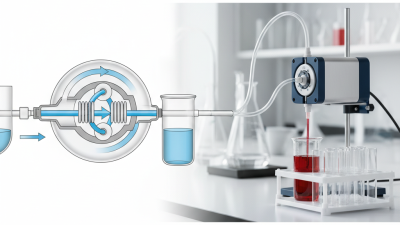
Peristaltic pumps move fluid by compressing a flexible tube against a circular track. A rotating roller creates a traveling pinch point. The tube closes behind the roller and pushes liquid forward. The fluid contacts only the tube’s inner surface. This design helps protect sensitive liquids from contamination.

Common types include fixed-speed, variable-speed, single-channel, and multi-channel pumps. Variable-speed models support precise dosing and easier flow adjustment.

Multi-channel versions can handle several fluids independently. Tube selection is critical. Material, wall thickness, elasticity, and chemical resistance directly affect accuracy and service life.

In practical testing, a pump may perform differently after long operation. Heat can soften the tube and reduce delivery precision. Pulsation may also become noticeable at higher speeds.

Small details matter. A smooth tube path reduces stress. Correct roller pressure prevents leakage without crushing the tube permanently.

Operators should check flow rate under real pressure, not only in a specification sheet. No selection rule is perfect.

A compact pump may save space but require more frequent tube replacement. Regular inspection remains necessary, especially when dosing expensive or temperature-sensitive fluids.

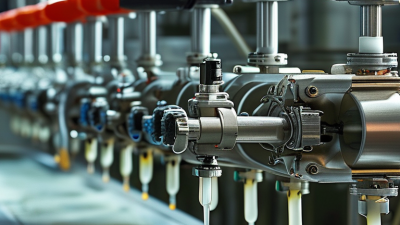
Key Design Types: Hose, Tube, and Shoe Pumps

What Are the Top Peristaltic Pump Types in 2026?

Peristaltic pumps remain important in dosing, wastewater, mining, and hygienic processing. Grand View Research reported a global peristaltic pump market value of about USD 1.1 billion in 2023. Its forecast also indicates steady growth through 2030. That growth reflects demand for gentle, sealed fluid transfer. However, market growth does not make one design suitable for every process.

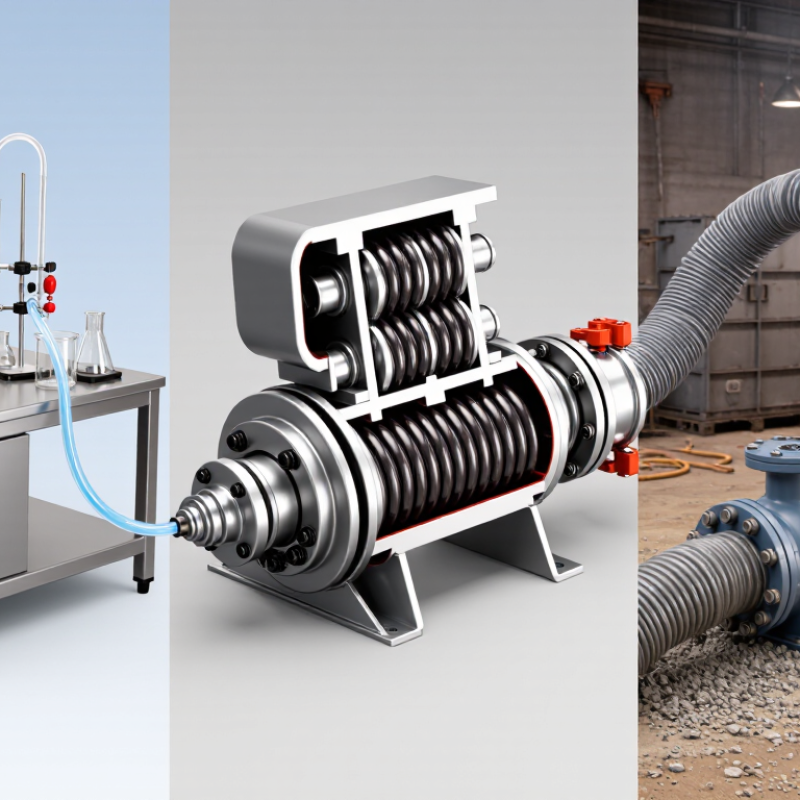
Hose pumps suit abrasive slurries, lime mixtures, and fluids containing suspended solids. Their thick hoses tolerate rough service and reduce contamination risk.

Tube pumps fit lower-pressure dosing and cleaner laboratory or food-processing duties. They usually offer simple maintenance and smaller footprints.

Shoe pumps use sliding shoes to compress the hose continuously. This design can support higher pressure and stable flow, but friction creates heat and increases hose wear.

A 2024 MarketsandMarkets report identifies industrial processing and water applications as major demand areas. Field experience suggests that pressure, hose material, speed, and cleaning cycles matter more than pump labels. That is easy to overlook.

Tips:

Check the required flow range at actual viscosity, not water viscosity. Record discharge pressure and fluid temperature during trials. For abrasive service, compare hose life under real solids loading. For hygienic service, review cleanability and material compatibility. The cheapest tube may become expensive quickly. A small mistake in sizing can mean frequent shutdowns. Test before committing.

Comparing Fixed-Speed, Variable-Speed, and Intelligent Models

In 2026, peristaltic pump selection increasingly centers on control, not simply flow capacity. Fixed-speed models remain practical for repeatable dosing tasks. They work well when fluid viscosity, tubing size, and daily volume stay consistent. A fixed unit can deliver steady movement with limited setup. However, tubing wear gradually changes the actual output. That assumption can fail. Operators should check flow with a graduated cylinder during scheduled maintenance.

Variable-speed pumps offer more flexibility for changing production conditions. An operator can adjust revolutions per minute without replacing the drive system. This helps when viscosity shifts or different tube diameters are required. Routine commissioning often reveals a small but important issue: displayed speed does not always equal delivered flow. Calibration should include pressure, temperature, and tubing age. Manual adjustment also depends heavily on operator judgment.

Intelligent models add sensors, programmed recipes, alarms, and feedback control. They can detect unusual pressure or compensate for measured flow changes. These features suit laboratories, water treatment, and processes needing traceable records. Still, intelligence does not replace sound installation practice. A poorly calibrated sensor can make an advanced pump appear accurate while dosing incorrectly. Maintenance teams should confirm sensor readings against a known volume. More automation may reduce routine errors, but it can also hide problems until the next inspection.

What Are the Top Peristaltic Pump Types in 2026? - Comparing Fixed-Speed, Variable-Speed, and Intelligent Models
Comparison Dimension Fixed-Speed Models Variable-Speed Models Intelligent Models
Primary operating principle Constant motor speed with a preset output Manually adjustable motor speed for changing flow demand Microprocessor-controlled speed with programmable settings and feedback options
Typical flow-rate range* Approximately 0.1–10 L/min, depending on tubing size and pump head Approximately 0.05–15 L/min, depending on the selected speed range and tubing Approximately 0.01–20 L/min, with the actual range determined by the pump head, tubing, and control mode
Flow adjustment Not available during normal operation; adjustment usually requires changing tubing, gearing, or the pump Manual adjustment through a knob, dial, keypad, or analog input Digital adjustment through a display, software interface, external signal, or stored recipe
Typical flow repeatability* About ±5–10% after initial setup About ±2–5% after calibration and stable tubing conditions About ±0.5–3% when properly calibrated and used with suitable sensors or closed-loop control
Pressure capability* Typically 1–3 bar for compact, general-purpose configurations Typically 1–5 bar, depending on tubing material and pump-head design Typically 1–7 bar in higher-performance configurations, subject to tubing and safety limits
Control modes On/off control On/off, manual speed control, and sometimes analog speed control Constant flow, batch dosing, timed dispensing, pulse control, remote control, and closed-loop operation
Automation and connectivity Low; usually limited to a power switch or simple external relay Moderate; may support analog inputs, foot switches, or basic remote start/stop High; commonly supports digital I/O, alarms, data logging, network communication, and process integration
Feedback and monitoring Usually no built-in flow or pressure feedback Often provides speed indication; flow feedback is commonly optional May monitor flow, pressure, motor load, tubing status, temperature, and operating alarms
Dosing suitability Best for simple, repeatable transfer where the flow demand remains constant Suitable for variable-volume dispensing and manually adjusted dosing Best for batch dosing, recipe-based production, precision dispensing, and changing process conditions
Tubing-life management Operator must manage speed, pressure, and replacement intervals manually Speed can be reduced to help extend tubing life, but monitoring is generally manual May provide programmable speed limits, pressure alarms, runtime tracking, and tubing-change reminders
Ease of installation Very high; simple setup and minimal configuration High; requires basic speed and tubing calibration Moderate; requires configuration, calibration, and possible integration with external controls
Relative purchase-cost index* 1.0 — lowest initial cost Approximately 1.5–3.0 compared with a comparable fixed-speed model Approximately 2.5–6.0 compared with a comparable fixed-speed model
Energy consumption profile Low to moderate; motor generally runs at one preset speed Low to moderate; consumption varies with operating speed and load Moderate; control electronics add a small electrical load, while optimized speed can reduce process energy use
Maintenance requirements Low; mainly tubing inspection and replacement Low to moderate; includes tubing inspection, calibration, and speed-control checks Moderate; includes tubing replacement, sensor verification, software or parameter checks, and calibration
Best-fit applications Basic liquid transfer, drainage, sampling, and processes with a constant flow requirement Laboratory dosing, water treatment, chemical transfer, and processes requiring operator-adjustable flow Bioprocessing, pharmaceutical production, automated filling, precision dosing, and digitally integrated manufacturing
Main limitation Limited flexibility and lower suitability for changing process requirements Accuracy depends strongly on manual calibration and operator consistency Higher cost, greater setup complexity, and dependence on correctly configured sensors and control software
Recommended selection priority Choose when simplicity, low cost, and constant output are the main requirements Choose when operators need adjustable flow without advanced automation Choose when traceability, repeatable dosing, remote control, alarms, and process automation justify the added investment
Data note: The numerical values are representative industry ranges for 2026 pump configurations, not universal specifications. Actual flow, pressure, repeatability, tubing life, and cost vary with tubing internal diameter, tubing material, fluid viscosity, temperature, pump-head design, calibration method, and operating conditions.

Selecting Pump Types for Different Fluids and Applications

What Are the Top Peristaltic Pump Types in 2026?

Selecting Pump Types for Different Fluids and Applications

Choosing a peristaltic pump starts with the fluid, not the catalog. Thin water-like liquids often suit precision tube pumps with adjustable speed control. They deliver gentle, repeatable dosing for laboratory fluids and cleaning solutions. Thick pastes need stronger hose pumps with wider flow paths. These models reduce clogging when handling slurries, creams, or mineral mixtures. Keep the particles visible. Abrasive solids can quickly wear unsuitable tubing.

For sterile or sensitive fluids, select a smooth-tube design with minimal contact points. The fluid should touch only the tube, which simplifies cleaning and reduces contamination risks. Food processing and pharmaceutical work may require validated tubing materials and controlled compression. Small diaphragm-style peristaltic units fit compact analyzers and sampling systems. They offer accurate low-flow delivery, but their capacity remains limited. That trade-off is easy to overlook.

Chemical compatibility deserves practical testing. A fluid may appear harmless but soften tubing after several hours. Check temperature, concentration, viscosity, and pressure together. In field testing, tubing life sometimes differs from laboratory estimates. Real cycling exposes heat, pulsation, and tiny installation errors. I would test a sample tube under actual duty conditions before approving a full system. Pump selection is not perfectly predictable. Be prepared to revise the choice.

2026 Trends in Peristaltic Pump Technology and Design

What Are the Top Peristaltic Pump Types in 2026?

Peristaltic pump design is moving toward smarter, cleaner, and more serviceable systems. Tube pumps remain popular for laboratory dosing, while hose pumps suit abrasive slurries and wastewater handling. OEM micro-pumps are gaining attention in compact analyzers and medical equipment. Pressure matters. MarketsandMarkets estimated the global peristaltic pump market at about USD 1.3 billion in 2024, with growth toward roughly USD 1.8 billion by 2029. Its projected annual growth rate is close to 6%.

In 2026, integrated sensors will monitor pressure, flow, tube fatigue, and motor temperature. These features can reduce unexpected stoppages, especially where a cracked tube may contaminate a process line. Low-pulsation rotor designs are also improving dosing accuracy. This matters when a filling system handles only a few milliliters per minute. Grand View Research identifies automation, pharmaceutical production, and water treatment as major demand drivers for precision pump technologies.

Material selection is becoming more deliberate. Silicone, thermoplastic elastomers, and reinforced hoses each behave differently under heat, chemicals, and repeated compression. Engineers increasingly compare life-cycle cost, not only purchase price. That approach is sensible, but forecasts are not identical. Reported market values vary by research method and application scope. Some designs still promise more than field conditions allow. Dust, poor calibration, and frequent dry running can defeat advanced controls. Better diagnostics help, but disciplined maintenance remains essential.

What Are the Top Peristaltic Pump Types in 2026?

2026 Trends in Peristaltic Pump Technology and Design

Hose pumps remain the preferred design for high-flow and abrasive applications, while tube pumps provide a balance between pressure capability, chemical compatibility, and maintenance. Precision laboratory pumps emphasize accurate low-flow dosing, and compact OEM pumps are increasingly used in portable and automated equipment. The values shown are representative upper-end engineering ranges commonly specified for each pump category; actual performance depends on tubing, pressure, speed, fluid properties, and operating conditions.

Reference basis: representative technical ranges from public peristaltic pump specifications and application engineering data; figures are intended for comparative design analysis rather than product selection.