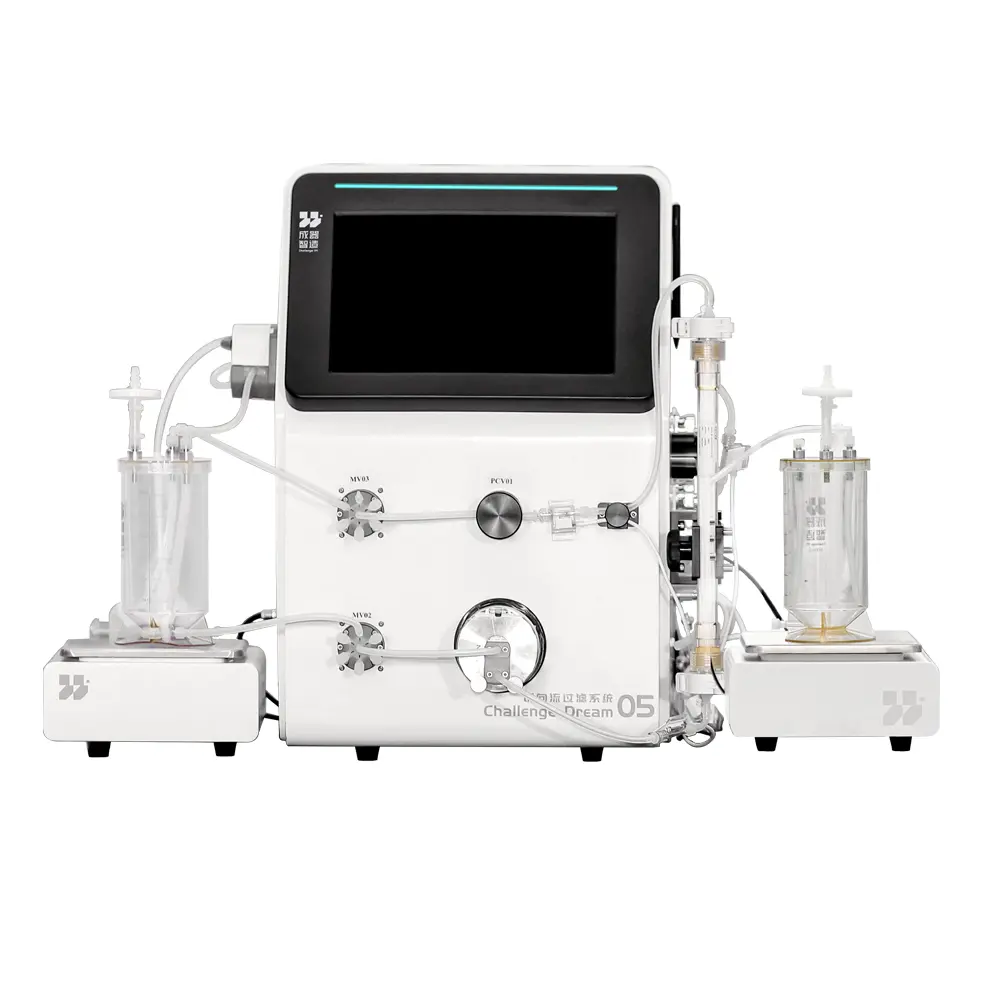
Choosing the right Nanofiltration Filter manufacturer can shape water quality, operating costs, and long-term system reliability. This article examines ten leading companies serving municipal, industrial, pharmaceutical, food processing, and laboratory applications. Their products may remove selected salts, organic compounds, color, hardness, and other microscopic contaminants.
The comparison focuses on practical evidence, not marketing language alone. Key factors include membrane material, pore performance, pressure requirements, flow capacity, chemical resistance, cleaning procedures, certifications, and technical support. Real installations also matter. A membrane operating beside a stainless-steel pretreatment skid faces different demands from one used in a compact laboratory unit. Small details count, such as replacement frequency, connection design, and the clarity of performance data.
No manufacturer fits every project. A high-flux membrane may reduce equipment size, yet it can require stricter pretreatment. Another option may offer stronger chemical tolerance but lower throughput. This review considers published specifications, industry experience, application suitability, and customer support to create a balanced starting point. However, rankings remain partly subjective. Regional service quality and changing product lines can alter the result. Readers should verify current certifications, test conditions, and warranty terms before making a purchase. That step is easy to skip. It should not be.
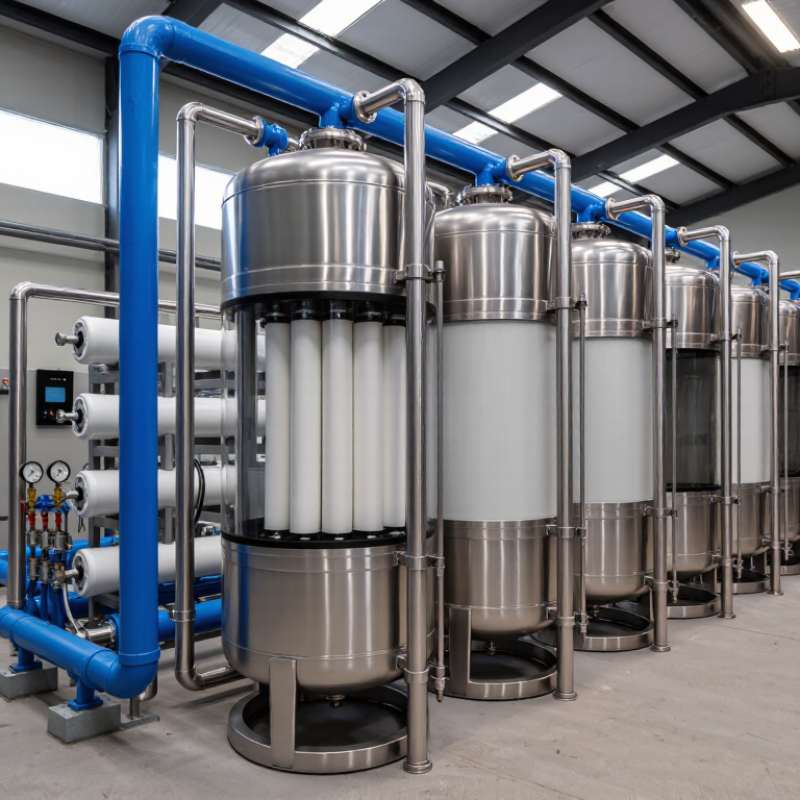
Nanofiltration is a pressure-driven membrane process used between ultrafiltration and reverse osmosis. Its membrane pores are extremely small, often close to one nanometer. Feed water passes across the membrane under pressure, while larger molecules and many dissolved ions remain on the concentrate side.
The separation mechanism is more complex than simple sieving. Size exclusion blocks larger organic compounds, hardness-forming ions, and suspended contaminants. Electrical charge also matters. Many nanofiltration membranes repel negatively charged ions, especially multivalent ions such as sulfate and calcium. Monovalent salts may pass through more easily. This selective behavior can reduce hardness while preserving part of the water’s mineral content.
Pressure alone does not guarantee stable performance. A practical system needs sediment removal, suitable pretreatment, and careful flow control. Operators often monitor conductivity, pressure difference, pH, hardness, and total organic carbon. A rising pressure difference may indicate fouling before water quality changes. Cleaning must match the foulant; an unsuitable chemical can damage the membrane.
Results vary with feed chemistry, temperature, recovery rate, and membrane design. That detail is easy to underestimate. Nanofiltration also cannot be treated as a universal barrier for every pathogen or contaminant. Pilot testing remains valuable, even when laboratory data looks convincing. Small changes in water composition can produce surprisingly different rejection rates, and no design is perfect.
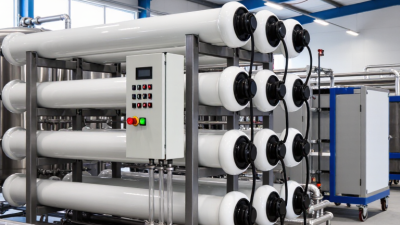
Nanofiltration (NF) is a pressure-driven membrane process positioned between ultrafiltration and reverse osmosis. Its semi-permeable membrane typically provides a molecular weight cutoff of about 200–1,000 daltons, allowing water and some small neutral molecules to pass while retaining many divalent ions, organic molecules, and hardness-forming salts.
The chart presents representative rejection ranges commonly associated with nanofiltration membranes. Actual performance depends on membrane chemistry, feed composition, pressure, pH, temperature, and system design. Manufacturer comparisons should therefore consider application-specific test data rather than brand presence alone.
Evaluating the top nanofiltration filter manufacturers requires more than comparing catalog prices. A reliable assessment begins with membrane performance, including salt rejection, organic contaminant removal, permeate flux, and operating pressure. Test results should identify feedwater temperature, pressure, pH, and recovery rate. Without these details, impressive numbers can mislead buyers.
Manufacturers with strong technical expertise explain how their membranes perform after prolonged use. They provide pilot testing, fouling data, cleaning guidance, and replacement intervals. Look for evidence from municipal plants, food processing lines, pharmaceutical facilities, or other relevant applications. Independent certifications and traceable quality-control records add authority. Manufacturing consistency also matters. Inspectors should review material specifications, production tolerances, and batch testing procedures.
Practical support deserves equal attention. Can the supplier size a system for changing water chemistry? Are engineers available during commissioning? Do they monitor pressure drops and membrane aging? These details often reveal real experience. Total cost should include energy use, pretreatment, cleaning chemicals, labor, and disposal requirements—not only the initial filter price.
No ranking is perfect. A membrane that performs well in one facility may struggle with high hardness or heavy fouling elsewhere. Published laboratory data can also differ from field results. Buyers should compare verified evidence, request site-specific trials, and question unusually strong claims. The best evaluation combines measurable performance with transparent communication, responsible manufacturing, and dependable after-sales service. Sometimes, the least dramatic supplier offers the clearest proof.
| Rank | Evaluation Dimension | Industry-Recognized Benchmark | Why It Matters | Suggested Weight |
|---|---|---|---|---|
| 1 | Salt and Multivalent-Ion Rejection | Typical nanofiltration systems provide approximately 50–90% rejection of monovalent salts and often more than 90% rejection of divalent ions, depending on membrane chemistry and test conditions. | Indicates the membrane’s ability to soften water and remove selected dissolved contaminants while allowing some smaller ions to pass. | 20% |
| 2 | Permeate Flow Performance | Commercial nanofiltration membrane elements commonly operate in the approximate range of 10–30 bar, with productivity varying by element size, temperature, feed salinity, and recovery. | Higher normalized permeate flow can reduce the membrane area, energy demand, and capital cost required for a project. | 15% |
| 3 | Operating Pressure and Energy Efficiency | Nanofiltration generally requires less pressure than conventional reverse osmosis for comparable water-treatment duties, although the actual requirement depends on feed quality and target separation. | Lower pressure can improve lifecycle economics and reduce electricity consumption. | 12% |
| 4 | Membrane Selectivity | A strong product specification clearly reports separation behavior for hardness ions, sulfate, organic molecules, and selected micropollutants rather than relying only on a single salt-rejection figure. | Selectivity determines whether the membrane matches applications such as water softening, color removal, or industrial reuse. | 12% |
| 5 | Chemical and Temperature Tolerance | Polyamide thin-film membranes are commonly operated within controlled pH and temperature limits; cleaning compatibility and maximum temperature must be verified from the technical datasheet. | Appropriate chemical resistance supports reliable cleaning and longer service life. | 10% |
| 6 | Fouling-Control Capability | Evaluation should include pretreatment requirements, feed spacer design, surface characteristics, normalized performance data, and cleaning guidance. | Fouling affects pressure drop, flow decline, cleaning frequency, and total operating cost. | 8% |
| 7 | Element and Housing Compatibility | Common spiral-wound element formats include approximately 4-inch and 8-inch diameters, with multiple standard lengths and connection configurations. | Standard dimensions simplify system integration, replacement, and spare-parts management. | 7% |
| 8 | Quality Management and Testing | Preferred manufacturers provide lot-level testing, traceability, published test conditions, quality-management documentation, and consistent nominal specifications. | Documented quality control reduces performance variation between membrane elements. | 6% |
| 9 | Compliance and Application Certifications | For drinking-water applications, buyers should verify applicable regulatory or third-party requirements, such as NSF/ANSI/CAN 61 or local potable-water approvals, where relevant. | Compliance documentation supports legal use, project approval, and customer confidence. | 5% |
| 10 | Technical Support and Lifecycle Service | Evaluation should consider design software, pilot testing, process calculations, commissioning support, troubleshooting, warranty terms, and replacement availability. | Responsive technical service reduces commissioning risk and helps maintain stable long-term operation. | 5% |
| Total Evaluation Weight | 100% | |||
Who are the top 10 nanofiltration filter manufacturers?
The answer depends on measurable performance, not advertising claims. A reliable shortlist should examine membrane selectivity, operating pressure, rejection rates, production scale, and verified field experience.
MarketsandMarkets reported that the global membrane filtration market could grow from about USD 8.5 billion in 2024 to USD 12.7 billion by 2029. This growth reflects stronger demand for compact water treatment systems. However, nanofiltration data is often grouped with other membrane technologies. That makes direct manufacturer comparisons imperfect.
The leading ten manufacturers typically include companies with strong polymer research, spiral-wound module production, industrial desalination experience, and long-term maintenance support. Buyers should request test results for hardness, sulfate, pesticides, and dissolved organic matter. A filter showing 95% salt rejection in laboratory water may perform differently with muddy feedwater.
The International Water Association highlights pretreatment as a major factor in membrane reliability. In practice, cartridge filtration, cleaning frequency, and pressure stability can matter as much as membrane chemistry. Some rankings overlook these operating details.
Tips:
Compare at least three technical datasheets. Check whether results use the same pressure, temperature, and feedwater. Ask for independent validation, not only internal testing. Review energy consumption per treated cubic meter. Also examine replacement lead times and local service coverage. A low purchase price can become expensive after repeated cleaning, premature fouling, or difficult module replacement. Industry reports offer useful direction, but site trials remain the more trustworthy test.
Comparing the top ten nanofiltration filter manufacturers requires more than checking catalog specifications. Their technologies differ in membrane chemistry, pore structure, module design, and operating pressure. Some focus on spiral-wound polymeric membranes for municipal water treatment. Others develop ceramic or specialty membranes for demanding industrial streams. The practical question is simple: does the membrane perform consistently with your feed water?
Application fit reveals important differences. A municipal operator may value hardness reduction, low energy demand, and stable salt rejection. A food processor may prioritize hygienic construction and gentle treatment of flavor compounds. Pharmaceutical facilities usually need traceable materials, controlled cleaning procedures, and reliable batch-to-batch performance. Industrial users often examine resistance to oils, solvents, temperature changes, and heavy fouling. Small details matter.
Look beyond the headline rejection rate. Request independent test data, operating pressure ranges, flux decline curves, and cleaning results. Ask whether tests used real wastewater or carefully prepared laboratory water. That distinction can change expectations. A membrane showing excellent performance at 25°C may behave differently at 10°C. Pretreatment also affects every comparison. Sediment, iron, biofilm, and organic matter can shorten membrane life when suppliers do not specify safeguards clearly.
Field experience suggests that support quality can equal membrane quality. Prompt troubleshooting, pilot testing, replacement availability, and installation guidance reduce operational risk. Some manufacturers publish extensive engineering data, while others provide attractive but incomplete figures. That weakness deserves attention. A technically impressive product may still be unsuitable if its data lacks long-term validation.
Choosing a nanofiltration manufacturer requires more than comparing catalog prices. MarketsandMarkets estimated the global nanofiltration membrane market at about USD 0.9 billion in 2023. It projects roughly USD 1.4 billion by 2028. This growth increases supplier choices, but not necessarily supplier quality.
Start with the feedwater problem. Ask for rejection data on hardness, sulfate, pesticides, and dissolved organic matter. The U.S. EPA Water Treatability Database shows that nanofiltration performance depends strongly on feed chemistry and operating conditions. A serious manufacturer should provide test results at stated pressure, temperature, pH, and recovery. Generic percentages are weak evidence. Request a pilot trial using your actual water. Small details matter, including pretreatment, cleaning frequency, and seasonal turbidity.
Check engineering support and lifecycle cost. Review membrane flux, pressure limits, chlorine tolerance, element dimensions, and replacement lead times. Confirm whether the supplier maintains batch traceability and documented quality controls. Independent certifications can help, but they do not replace application testing. A polished datasheet is not enough. Neither is the lowest quotation. Poor pretreatment may cause rapid fouling and expensive downtime. Buyers should also ask for cleaning instructions, failure-analysis procedures, and references from similar water applications. In practice, supplier interviews can reveal gaps that brochures hide. My own view is slightly cautious: even a technically strong manufacturer may struggle if communication is slow. A written service-response target is worth adding to the contract.