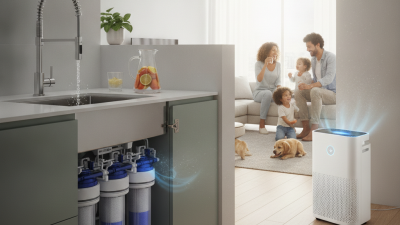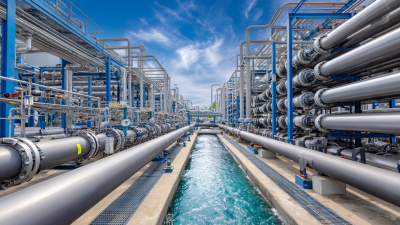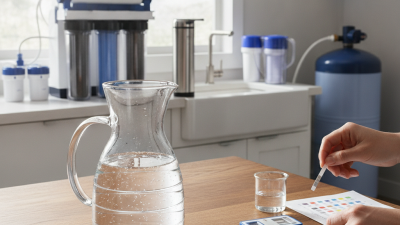
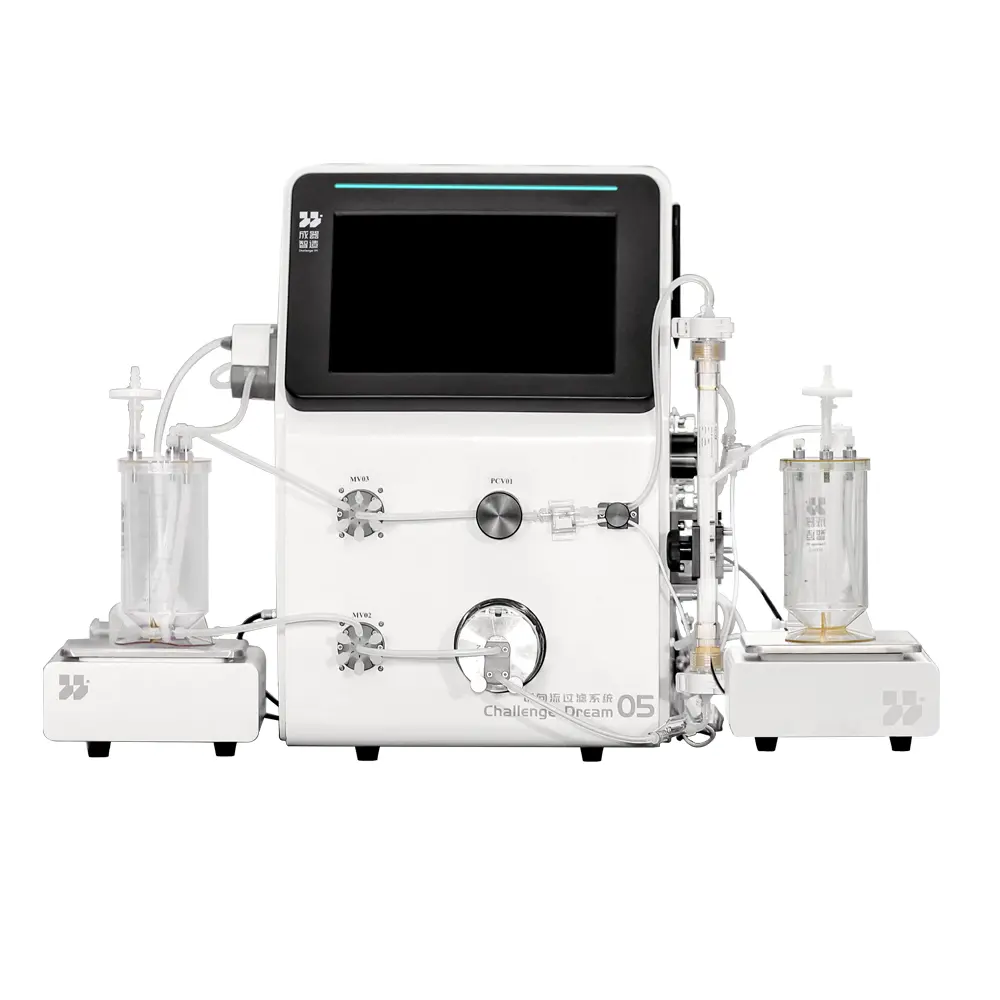
A Filtration System is more than a cartridge, membrane, or layer of sand. It is a controlled barrier that captures unwanted particles while allowing selected fluids or gases to pass. In a water plant, this may involve screens, coagulation, granular media, activated carbon, and membrane stages. Air systems often use pleated filters, HEPA media, or electrostatic components.
The need is substantial. The WHO and UNICEF Joint Monitoring Programme reported that 2.2 billion people lacked safely managed drinking water in 2022. The U.S. Environmental Protection Agency’s 7th Drinking Water Infrastructure Needs Survey estimated that American systems require about $625 billion over 20 years. These figures show why filtration design affects public health, operating costs, and resource security.
Dr. John Crittenden, a leading water-treatment engineer and co-author of MWH’s Water Treatment, states, “Filtration is a physical separation process, not a guarantee of complete purification.” That distinction matters. A filter can look clean and still perform poorly. Flow rate, pressure, particle size, temperature, maintenance, and media condition all influence results. Even a premium Filtration System can fail when operators ignore replacement intervals or measure only appearance.
This guide explains how filtration works, from particle capture to pressure loss and maintenance. It also questions a common assumption: clearer output does not always mean safer output. Data from the EPA, WHO, and industry research reports can guide decisions, but field conditions remain imperfect. Real systems need testing, monitoring, and occasional redesign.
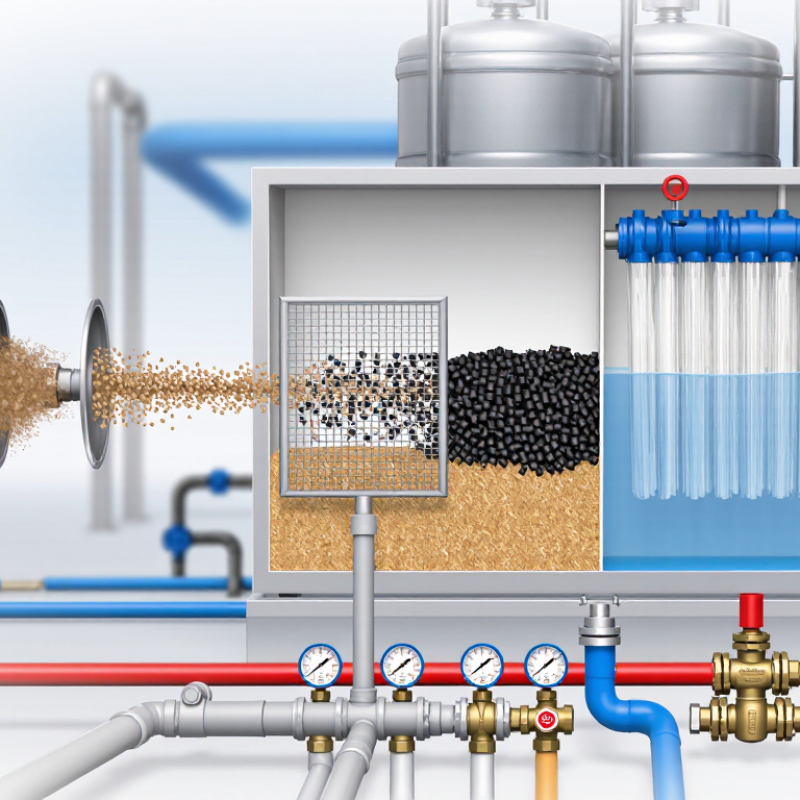
A filtration system separates unwanted particles from a fluid or air stream. It may remove dust, sediment, microbes, metal fragments, or oil droplets. Filtration is not magic. At its core, the process uses a barrier with controlled openings. As water, oil, gas, or air moves through it, contaminants remain on or inside the filter material. Cleaner fluid continues downstream. Some systems use several layers, because one material rarely handles every contaminant effectively.
In a workshop, a pleated filter can trap fine dust while air passes through its folds. For liquid systems, screens, cartridges, or porous membranes may catch suspended solids. Pressure pushes the fluid through the filter. As captured material builds up, resistance increases and flow may weaken. A rising pressure difference often signals blockage. A clean-looking filter may still contain deeply embedded particles. This detail is easy to miss.
Reliable filtration begins with accurate contaminant information. Engineers consider particle size, concentration, temperature, flow rate, and chemical compatibility. A filter rated for large sediment cannot reliably capture tiny particles. Some contaminants pass through, dissolve, or damage the media. Real-world performance can also decline when installation is poor or maintenance is delayed. Field inspections often reveal this gap between laboratory ratings and daily operation. Clear service records, suitable testing, and timely replacement make the system more dependable, though no design is perfect.
A filtration system separates unwanted particles, gases, or microbes from air or liquid. Its performance depends on four connected parts, not the filter alone. The U.S. Environmental Protection Agency reports that indoor pollutant levels can be two to five times higher than outdoor levels, and sometimes much higher.
Filter media captures contaminants through interception, impaction, diffusion, adsorption, or a combination of these methods. Fibrous media may trap dust, while activated carbon targets certain odors and gases. Higher efficiency can also create greater pressure loss.
The housing must hold the media firmly and maintain even flow across its surface. Poorly supported media can bend, tear, or develop bypass gaps. Small gaps matter.
Seals close the space between the filter and housing. A damaged gasket may let unfiltered air pass around an efficient element. Flow controls, including dampers, valves, fans, and sensors, regulate speed and pressure.
ISO 16890 evaluates air filters by particulate size, while ASHRAE Standard 52.2 uses efficiency ratings and test procedures. These standards improve comparison, but laboratory results do not perfectly predict field conditions. Installation quality still decides much of the outcome.
A 2021 World Health Organization report linked air pollution exposure with widespread health risks, reinforcing the need for measured filtration performance.
In practice, pressure readings, seal inspections, and scheduled replacement records reveal problems earlier than appearance alone. A clean-looking filter may already be overloaded.
A filtration system separates unwanted particles or chemicals from air or water. Its performance depends on contaminant size, chemistry, flow rate, and contact time. The WHO and UNICEF Joint Monitoring Programme reported that 2.2 billion people lacked safely managed drinking water in 2022. That figure makes correct filtration more than a technical preference.
Screening is the visible first barrier. A mesh or cartridge catches sand, rust, and suspended solids. Adsorption works differently. Activated carbon holds chemicals on its porous surface, including many compounds that create taste or odor. Absorption takes contaminants into the material itself, like liquid entering a sponge. The distinction is often blurred in product descriptions.
Membranes use pressure and microscopic openings to separate substances. Microfiltration removes larger particles, while tighter membranes can reduce bacteria, dissolved salts, and some viruses. The World Health Organization’s Guidelines for Drinking-water Quality stress that treatment effectiveness must be verified against specific hazards, not assumed from technology names.
Tips: Test the incoming water first. Check flow, pressure, temperature, and cartridge capacity. Replace media before breakthrough occurs. A cloudy glass after several weeks may signal loading, not failure. Still, no filter removes everything. Even careful choices can miss an unexpected contaminant, so periodic laboratory testing remains wise. Industry specifications are useful, but field conditions are messier than brochures suggest.
A filtration system cleans air by moving it through a material that captures unwanted particles. A fan creates airflow, while the filter holds dust, pollen, smoke, and other contaminants. In a properly sealed unit, air passes through dense fibers that trap particles through interception, impact, and diffusion. The process is simple, but performance depends on design and maintenance.
According to the U.S. Department of Energy, a true HEPA filter removes at least 99.97% of 0.3-micron particles under tested conditions. This size is difficult to capture, so it serves as a useful benchmark. It does not mean every particle is removed in every room. Gaps around the filter can reduce protection. So can a clogged filter.
Clean installation matters. I have seen airflow weaken when filters were left unchanged for too long. The room may feel dusty again, even with a powerful fan. Check the seal, follow the replacement schedule, and avoid crushing or wetting the filter. A pressure gauge can also show when airflow resistance is rising.
HEPA performance is measurable. Real-world results are less perfect. The filter rating is not the whole system.
| Filtration Stage or Type | Primary Mechanism | Typical Target | Common Role | Performance Notes | Maintenance Consideration |
|---|---|---|---|---|---|
| Screening / Straining | Particles larger than the openings are physically blocked. | Large debris, leaves, fibers, and visible sediment | Pre-filtration for air or liquid systems | Particle removal is mainly determined by the opening or mesh size. | Clean or replace the screen when debris restricts flow. |
| Sediment Filtration | Depth capture, interception, and surface screening within a porous medium | Sand, rust, silt, and suspended solids | Water treatment and liquid process protection | Pressure loss generally increases as captured solids accumulate. | Replacement is required when the pressure drop becomes excessive or flow declines. |
| Coarse Air Filtration | Inertial impaction, interception, and partial sieving | Dust, lint, hair, and larger airborne particles | First-stage protection for ventilation equipment | It reduces the particle load reaching finer filters but is not intended for high-efficiency fine-particle removal. | Regular inspection helps prevent airflow restriction and protects downstream filters. |
| Activated Carbon Adsorption | Gas molecules adhere to the internal surface of porous carbon. | Many odors and selected gaseous contaminants | Odor control and targeted gas-phase treatment | It is different from particle filtration and does not replace a particle filter. | Service life depends on contaminant concentration, humidity, airflow, and carbon quantity. |
| Electrostatic Filtration | Particles are electrically charged and attracted to oppositely charged collection surfaces. | Airborne particles across a broad size range | Reusable or electrically assisted air-cleaning systems | Collection efficiency can change with airflow, particle loading, electrical conditions, and cleaning. | Collection plates or media must be cleaned or replaced according to the system design. |
| HEPA Filtration | Diffusion, interception, and inertial impaction within a dense fiber filter. | Fine airborne particles, including dust and many aerosols | High-efficiency air cleaning in controlled environments | A commonly cited HEPA benchmark is at least 99.97% removal of 0.3-micron particles under the specified test conditions. | Replacement is needed when the filter reaches its service limit or causes excessive pressure drop. A tight seal is essential to prevent bypass leakage. |
| Ultrafiltration | Pressure-driven membrane separation with very small pores | Colloids, suspended solids, bacteria, and some macromolecules | Water and wastewater treatment | Membrane performance is commonly described by molecular-weight or pore-size characteristics, not only by a single particle diameter. | Pre-treatment and periodic cleaning help control fouling and maintain flow. |
| Reverse Osmosis | Pressure forces water through a semipermeable membrane while many dissolved substances are retained. | Dissolved salts, ions, and many small contaminants | Production of purified water | Unlike ordinary particle filters, it can reduce dissolved constituents, but it produces a concentrated reject stream. | Pre-filters, membrane cleaning, and replacement schedules are important for stable performance. |
| Sterile or Microbial Filtration | Physical retention of microorganisms by a membrane or depth medium | Bacteria and other microorganisms, depending on filter rating | Laboratory, pharmaceutical, food, and water-processing applications | Validated performance depends on the rated pore size, organism characteristics, pressure, flow, and integrity of the filter. | Integrity testing, hygienic handling, and controlled replacement are essential where sterility is required. |
A filtration system removes airborne particles as air passes through a fibrous or pleated filter. The fan creates airflow, while the filter captures particles through interception, impaction, and diffusion. MERV ratings measure removal performance under controlled laboratory conditions, not every household situation.
Under ASHRAE Standard 52.2, a MERV 13 filter captures at least 85% of particles measuring 1–3 microns. That range includes many fine particles carried in indoor air. It is an important benchmark. However, the result depends on airflow, filter loading, installation quality, and testing conditions. A laboratory percentage is not a guarantee for every room.
Real buildings are less tidy.
The U.S. Environmental Protection Agency reports that indoor particulate levels can sometimes exceed outdoor levels. Cooking, candles, dust, and poor ventilation may increase exposure. A properly fitted MERV 13 filter can reduce recirculated particles, especially when the HVAC fan operates regularly. ASHRAE recommends MERV 13 or higher where systems can support the added pressure resistance. That qualification matters. A highly rated filter may reduce airflow if the equipment is undersized or neglected. Check the filter’s fit, replacement schedule, and pressure-drop guidance. Field measurements can reveal problems that specifications miss. The strongest approach combines filtration with source control and outdoor-air ventilation, rather than trusting one number.