zh-cn
  • sns01-1
  • sns04-1
  • sns02-1
Leave Your Message

What Is a Filtration Bag and How Does It Work?

A Filtration Bag is a removable filter element used to separate suspended solids from liquids. It sits inside a housing, where incoming liquid passes through the bag’s porous fabric. Particles remain inside or on the media, while filtered liquid exits the vessel. The principle is simple. The details matter.

Grand View Research estimated the global industrial filtration market at about US$31.5 billion in 2023, with continued growth projected through 2030. Its report covers several filtration technologies, not bag filters alone, so the figure gives market context rather than a bag-specific forecast. Still, it reflects the importance of reliable filtration across manufacturing, water treatment, and other industries. The U.S. Environmental Protection Agency’s industrial wastewater guidance also describes filtration as a physical process for removing suspended material. Actual performance depends on the liquid, particle characteristics, media, and operating conditions.

In a typical system, a pump moves liquid into the housing and through a supported bag. Woven mesh can capture relatively coarse particles; felt media can retain finer solids, depending on its construction and rating. As particles accumulate, pressure difference across the bag often rises. Operators monitor that change and replace the bag when it reaches the process limit. One detail is easy to overlook: a stated micron rating does not guarantee identical removal in every application. Ratings and test methods vary. That deserves a closer look. Understanding the housing, bag material, and operating limits helps explain what a Filtration Bag can—and cannot—do.

Sources: Grand View Research, Industrial Filtration Market Size, Share & Trends Analysis Report; U.S. EPA, industrial wastewater treatment guidance.
What Is a Filtration Bag and How Does It Work?

What a Filtration Bag Is

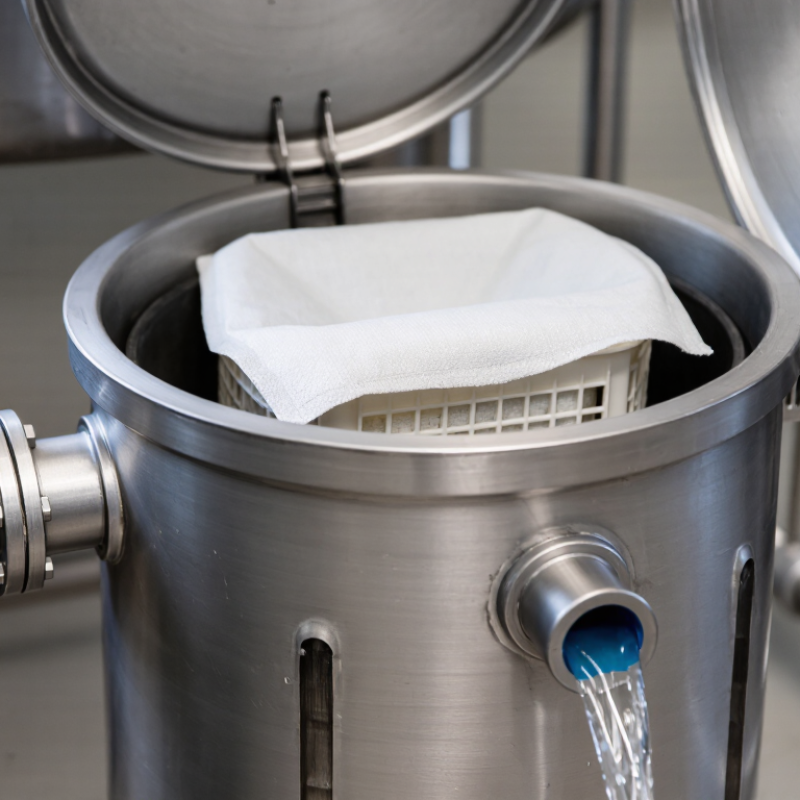
A filtration bag is a flexible, porous container that captures suspended particles as liquid passes through it. It usually sits inside a supporting vessel, with its opening secured beneath the vessel lid. The fabric or mesh acts as the filtering surface; the bag itself does not chemically clean the liquid. Simple, but useful.

Filtration bags can be made from woven mesh or nonwoven felt. Mesh tends to retain larger particles, while felt can trap finer material within its fibers. The stated micron rating describes the intended particle size range, but it does not guarantee identical results in every system. Flow rate, pressure, particle shape, and liquid viscosity all affect performance. Small details matter.

In use, liquid enters the vessel, passes through the bag, and leaves while retained solids collect inside. When flow slows or pressure rises, the bag may need inspection or replacement. A careful fit helps prevent liquid from bypassing the filter. Material compatibility matters, too: heat or certain fluids can weaken a bag. In practice, specifications can look more precise than real operating conditions. That deserves a second look.
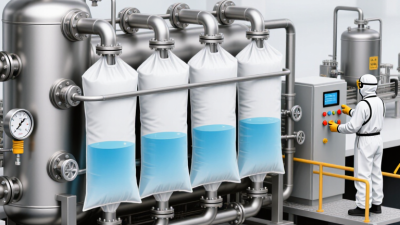
Key Parts and Materials of a Filtration Bag

A filtration bag is a flexible container that holds filter media while liquid or air passes through it. Its main parts are the bag body, inlet collar, seams, and closed base. The collar helps secure the bag inside a housing, while the seams keep unfiltered material from bypassing the fabric. Some designs include a support ring or lifting handles for easier installation and removal. Small construction details matter.

The body material affects particle capture, flow, and chemical compatibility. Polypropylene is commonly used for many general-purpose liquid applications. Polyester can suit some warmer operating conditions, while nylon may be selected when strength and repeated use matter. These are not universal choices; temperature, fluid chemistry, particle size, and pressure all influence performance. A bag that looks robust may still clog quickly if its pore rating is too fine. Even experienced operators can overlook that trade-off.

Tips: Check the collar fit, seam condition, and material compatibility before installation. Look for fraying or distortion after use. A neatly fitted bag can still perform poorly when the operating conditions change, so record pressure and replacement intervals. The right material is not always obvious at a glance.

How Fluid Enters and Passes Through the Bag

How Fluid Enters and Passes Through the Bag

In a typical liquid bag-filter housing, fluid enters through an inlet and flows into the bag’s open mouth. A retaining ring holds the opening against the housing seal. Most standard designs direct liquid from inside the bag outward. The porous fabric or felt captures particles, while filtered liquid passes through the bag and exits the housing. Flow is not always perfectly even; bag shape, viscosity, and loading can affect how liquid spreads across the media.

As particles collect, they form a layer that can increase resistance and pressure drop. Operators often monitor the pressure difference between the inlet and outlet to decide when to change the bag. ISO 16889:2022 describes multipass testing for hydraulic filter elements: a beta ratio of 200 corresponds to 99.5% particle-count reduction at the stated particle size. This is a test benchmark, not a guaranteed bag-filter rating. Actual performance depends on the bag, fluid, flow rate, and test conditions.

Tips: Check the bag seal before operation. Track differential pressure, and confirm the specified micron rating suits the process. A clean-looking outlet is not proof of a particular particle-removal efficiency.

How the Bag Captures and Retains Particles

A filtration bag captures particles as fluid passes through its porous wall. In liquid service, larger particles may be stopped at the surface, while smaller ones can lodge between fibers. The exact pattern depends on media, pore structure, flow rate, and particle shape. A sharp grain may behave differently from a soft, deformable particle of the same size. That detail matters.

As particles accumulate, they form a surface layer, often called a filter cake. This layer can catch finer material, but it also raises pressure drop and may reduce flow. For dry dust collection, the U.S. EPA’s Air Pollution Control Cost Manual reports fabric-filter collection efficiencies generally above 99% under suitable operating conditions. That figure describes systems, not every bag or every liquid application.

One caveat: a “nominal” micron rating is not a guarantee that every particle above that size will be retained. Test methods and operating conditions matter.

Even a well-selected bag can perform poorly if overloaded, installed incorrectly, or exposed to incompatible fluids. The overlooked part is maintenance. A pressure reading and a look at the collected material can reveal trouble early. Not perfectly, but usefully.

Common Applications and Filtration Bag Selection

What Is a Filtration Bag and How Does It Work?

Filtration bags are used to remove suspended solids from liquids as the liquid passes through a porous fabric. They are common in water treatment, food and beverage production, coatings, and metalworking. In a typical housing, liquid enters the bag, flows through its material, and leaves behind particles that collect inside. The captured solids build up over time. Small details matter.

Choosing a bag starts with the process, not just the particle size. Consider the liquid’s viscosity, temperature, flow rate, and chemical compatibility with the bag material. A finer rating may capture smaller particles, but it can also restrict flow and require more frequent changes. Check whether the stated rating is nominal or absolute; the terms describe different levels of particle capture. The housing size and sealing arrangement matter too, since poor fit can let liquid bypass the filter.

Watch pressure changes during operation. A rising pressure difference across the bag can indicate that solids are accumulating and the bag needs attention. For a new process, testing a few suitable ratings under real operating conditions can reveal trade-offs that a specification sheet misses. There is no perfect choice for every application. A bag that works well at startup may perform differently as the liquid composition shifts.

What Is a Filtration Bag and How Does It Work? - Common Applications and Filtration Bag Selection

Bag Type or Material How It Works Common Applications Typical Particle-Retention Range Key Selection Considerations
Polypropylene felt A nonwoven depth medium captures particles within its thickness as liquid flows through the felt. Water treatment, plating solutions, paints, and general-purpose process liquids. Commonly available from about 1 to 200 µm; performance depends on construction and rating method. Check chemical compatibility, operating temperature, flow rate, and whether the stated rating is nominal or absolute.
Polyester felt Depth filtration traps suspended solids throughout a fibrous, nonwoven structure. Oils, coatings, industrial wash liquids, and applications requiring good resistance to many organic solvents. Often offered across roughly 1–200 µm, depending on bag design. Confirm compatibility with the specific fluid; polyester is not suitable for every chemical or high-temperature condition.
Nylon monofilament mesh A woven screen retains particles larger than its openings, allowing surface filtration and, in suitable designs, cleaning for reuse. Food and beverage processing, inks, and coarse particle removal from compatible liquids. Mesh openings commonly range from tens to hundreds of micrometres. Choose an opening size based on the target particle; verify chemical, temperature, and any food-contact requirements.
Polypropylene mesh Woven openings provide surface capture of particles above the selected mesh opening. Coarse filtration of water-based liquids, chemicals, and process streams compatible with polypropylene. Available in a range of openings, often from tens to several hundred micrometres. Useful when a defined opening and low particle loading are priorities; check pressure and temperature limits.
PTFE felt or membrane-faced media A chemically resistant medium captures particles by depth filtration or through a finer membrane layer, depending on construction. Aggressive chemicals and specialized process liquids where other materials may not be compatible. Varies widely by design; consult the product specification for the stated rating and test method. Typically selected for chemical resistance; verify the full assembly, seals, support structure, temperature, and pressure limits.
General bag-filter operation A pump or system pressure moves liquid into a filter housing and through the bag. Solids collect in or on the media while filtered liquid exits the housing. Manufacturing, water and wastewater treatment, food and beverage processing, chemical processing, and liquid paint or coating systems. Ratings range from coarse to fine; the achievable result depends on the bag, fluid, operating conditions, and rating definition. Match bag size to the housing; consider flow, solids load, viscosity, allowable pressure drop, sealing, and replacement frequency.

Micron ratings and operating limits vary by construction and manufacturer. Confirm the specification for the intended liquid, temperature, pressure, and required filtration performance before selection.