Industrial buyers rarely notice a bag filter until a pressure gauge climbs or a changeout takes too long. Then the details matter: housing size, bag material, micron rating, flow rate, and the way operators handle a wet, loaded filter. Bag Filtration can protect process quality and equipment, but the right system depends on the fluid, operating conditions, and maintenance routine—not a headline micron rating alone.
A guiding line for this article comes from a fictional expert voice, filtration engineer Maya Chen: “A filter performs well only when its rating, housing, and service routine fit the process.” This is an editorial quote, not a statement from a real, independently verified specialist. It captures a practical point buyers can test against vendor data, trial results, and site experience.
The ten systems in this guide are compared through buyer-focused criteria, including construction, capacity, changeout access, and application fit. Look closely at seal design and bag support, too; a small leak can undermine otherwise careful selection. No shortlist replaces a process review. Actual performance may differ. That caveat deserves attention.
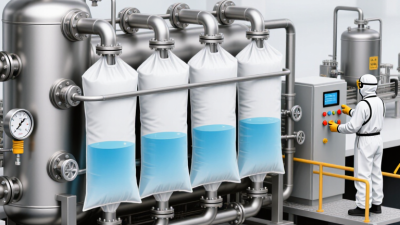
An industrial bag filtration system removes suspended solids by directing liquid through a fabric or felt bag. The liquid enters a pressure-rated housing and flows into the bag, which sits inside a rigid support basket. Particles collect on the bag’s inner surface, while filtered liquid passes through the media and exits. Simple in principle. The basket helps prevent collapse under pressure, and a properly seated gasket limits bypass. Performance depends on more than the micron rating: viscosity, flow rate, particle shape, and solids concentration all affect capture and service life.
As solids accumulate, resistance rises and the pressure difference between the inlet and outlet usually increases. Operators monitor this differential, then isolate the housing, release pressure, and drain it before opening. The loaded bag is removed and replaced; careful handling matters because a wet bag can release trapped solids. Not glamorous work. A new bag must fit the basket and seal correctly, or liquid may slip around it instead of through it. Start-up procedures often include venting trapped air and checking for leaks. One practical limitation is that frequent changeouts can cause downtime and add to operating costs. Testing with the actual liquid helps, since a rating alone cannot predict results.
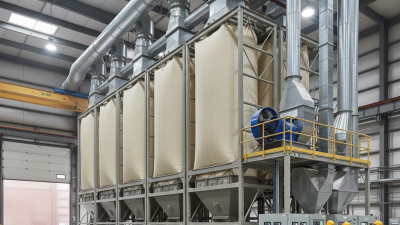
When evaluating bag filtration systems, start with the dust, not the equipment brochure. Record particle size, moisture, temperature, abrasiveness, and whether the dust changes during production. A damp powder can cake on the bags; sharp particles can wear them faster than expected. Small details matter.
The U.S. EPA’s 2003 “Air Pollution Control Technology Fact Sheet: Fabric Filter” reports typical collection efficiencies of 99–99.9% and pressure drops of 5–20 inches of water. These are reference ranges, not guarantees for every installation. Compare expected pressure drop, airflow, cleaning method, and emissions under your actual operating conditions.
The EPA’s “Air Pollution Control Cost Manual” also frames fabric-filter selection around both design and operating costs. Include fan energy, compressed air, replacement bags, and maintenance labor in the comparison.
Access is easy to overlook. Can technicians safely remove a bag without dismantling nearby ductwork? Ask suppliers for test conditions behind quoted performance figures, and check how often cleaning cycles run at peak load. A tidy lab result may not reflect sticky, variable dust. I would also leave room for uncertainty: process conditions drift, and sizing assumptions sometimes need revision. Verify the plan with site measurements before purchasing.
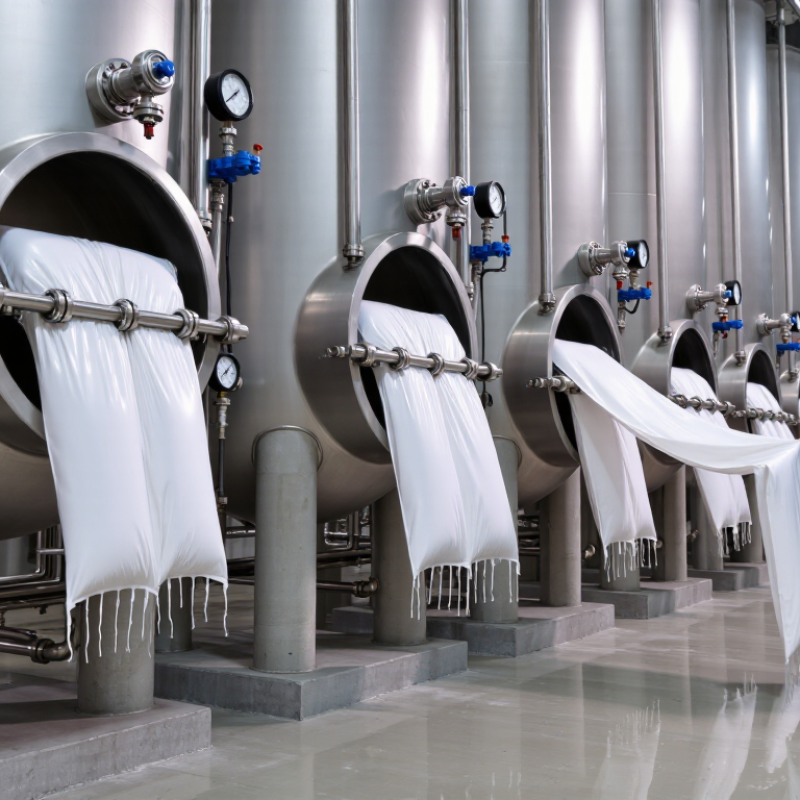
Industrial bag filters are not one design. Liquid-service housings commonly use single-bag vessels for modest flow and multi-bag vessels for higher throughput. Duplex housings let operators switch vessels during changeouts, though valves and seals add maintenance points. For paint, chemical, and food-process liquids, bag material and micron rating should match the fluid, temperature, and contaminant load. A fine rating is not automatically better; it can raise pressure drop and shorten service life.
Dry dust collection uses fabric-filter bags instead. In its Air Pollution Control Cost Manual, the US Environmental Protection Agency reports typical fabric-filter particulate collection efficiencies above 99%. That figure describes properly designed and operated dust collectors, not liquid-bag housings. Pulse-jet, reverse-air, and shaker systems clean dust from bags in different ways. Pulse-jet units suit continuous industrial operation, while shaker designs are often simpler but require cleaning downtime. Small details matter. Dust characteristics, airflow, and bag wear can change actual performance.
Tips: Track differential pressure and inspect bags for tears or blinding. For liquids, record changeout intervals and check seals; a clogged bag may signal upstream process changes. Confirm compatibility with the filter manufacturer’s technical data, and pilot-test when the fluid varies. One weak point: operators sometimes choose by micron rating alone. That shortcut can disappoint.
Approximate filter-bag surface area by standard bag size. Areas are calculated from nominal diameter and length as cylindrical side area; they exclude the closed end.
Larger bags provide more media area, but area alone does not determine system flow or service life. Selection also depends on the filter media, micron rating, liquid viscosity, solids loading, and allowable pressure drop.
Ten Bag Filtration Systems for Industrial Buyers
Industrial buyers can compare ten practical bag-filter configurations: simplex, duplex, multi-bag, high-flow, side-entry, top-entry, sanitary, jacketed, pressure-rated, and portable skid systems. These describe housing layouts and operating features, not ten entirely separate filtration technologies. A simplex housing suits steady, modest flow; duplex units allow one chamber to operate while the other is serviced. Multi-bag and high-flow designs handle greater throughput, while portable skids help with temporary process lines. Small details matter.
Selection starts with the liquid, not the catalogue. Record flow rate, viscosity, operating temperature, pressure, and the type and load of solids. A sticky coating slurry may blind a fine bag quickly; a coarse prefilter can sometimes extend service life. Check bag compatibility with the fluid, housing seals, and changeout procedure. A neat specification can still fail on the plant floor.
Water use gives this choice wider context. UNESCO’s 2017 World Water Development Report estimates industry accounts for about 19% of global freshwater withdrawals. The U.S. Geological Survey’s 2015 water-use assessment reports roughly 14.8 billion gallons per day withdrawn for industrial use in the United States. These figures do not prove that bag filtration cuts consumption, but they show why process control deserves attention. Track pressure drop and changeout frequency during a trial; actual operating data may challenge the initial selection.
A bag filtration system should match the actual process, not just a target micron rating. Start with flow rate, liquid viscosity, operating temperature, and the amount of solids entering the line. A thin rinse stream behaves very differently from a warm, resin-heavy batch. Small details matter. Check whether the housing can handle peak flow without excessive pressure drop, and confirm that the bag material suits the liquid’s chemistry. A nominal retention rating is not always an absolute cutoff, so ask how performance is measured.
Maintenance conditions matter just as much as filtration efficiency. If operators cannot safely reach the housing, frequent bag changes may slow production. Review the expected dirt load, available change-out space, and how differential pressure will be monitored. For example, a process with fiber-like debris may need a different bag support arrangement than one capturing fine mineral particles. Pilot testing can reveal blinding, bypass, or short service life before a full installation. Test before committing. A catalog specification can look convincing and still miss the behavior of a real process. Compare trial results with your operating data, and leave room to revise the initial selection. A perfect match is rare.
Compare these common bag-filter housing configurations by process needs. “Best” refers to the application fit, not a specific manufacturer or model.
| System Type | Typical Configuration | Best Fit | Main Advantages | Trade-Offs | Key Selection Checks |
|---|---|---|---|---|---|
| 1. Single-Bag Housing | One filter bag in a pressure-rated housing; commonly used with standard bag sizes. | Small to moderate flows, pilot lines, batch processes, and point-of-use filtration. | Compact footprint, straightforward installation, and relatively simple bag changes. | Production may need to stop during bag replacement unless a bypass or spare line is provided. | Flow rate, dirt-holding capacity, bag dimensions, allowable pressure drop, and changeout access. |
| 2. Multi-Bag Housing | Several bags operate in one vessel, increasing total available filtration area. | Higher-flow processes where a single-bag unit would require frequent changes or excessive pressure drop. | Handles more flow in one vessel and can extend service intervals when solids loading is distributed across bags. | Requires more space and lifting clearance; changing multiple bags can take longer. | Number of bags, flow per bag, solids loading, vessel access, and safe handling of heavy or wet bags. |
| 3. Duplex Changeover System | Two housings connected with valves so one can filter while the other is isolated for servicing. | Continuous or near-continuous processes that cannot readily stop for routine bag changes. | Allows one side to remain in service during changeout of the other. | More valves, piping, floor space, and operating steps than a single housing. | Changeover procedure, valve arrangement, pressure equalization, isolation, and prevention of untreated bypass. |
| 4. Parallel Housing Bank | Two or more independent housings operate in parallel, often with a common inlet and outlet manifold. | Large or variable flows that benefit from staged capacity or modular expansion. | Can distribute flow across vessels and allow capacity to be added in stages. | Unequal flow distribution can cause uneven bag loading; manifold design and balancing matter. | Design flow at peak demand, branch balancing, isolation valves, pressure drop, and maintenance access. |
| 5. High-Flow Bag System | A housing and bag arrangement designed to pass higher flow through a larger effective filtration area. | High-volume liquid streams where reducing the number of housings or changeouts is important. | Can reduce vessel count compared with smaller units when properly sized for the process. | Large bags may be heavier and more difficult to remove; performance depends on the fluid and solids load. | Actual operating flow, viscosity, particle loading, bag support, changeout equipment, and supplier-verified capacity. |
| 6. High-Pressure-Rated Housing | A vessel engineered for the process pressure and applicable design code. | Pressurized transfer, pumping, and process lines operating above the rating of standard low-pressure equipment. | Provides a defined pressure boundary when correctly specified and installed. | Higher design pressure may increase vessel weight, cost, and inspection requirements. | Maximum allowable working pressure, design temperature, relief protection, code requirements, and pressure-drop limits. |
| 7. High-Temperature Service System | A housing, seals, and filter bag selected together for the operating temperature and fluid chemistry. | Hot process liquids that exceed the limits of common bag or elastomer materials. | Can support filtration at elevated temperatures when every wetted component is appropriately rated. | Material choices may be narrower; temperature can affect bag strength, seals, and fluid viscosity. | Continuous and upset temperatures, chemical compatibility, seal material, thermal cycling, and bag rating. |
| 8. Sanitary-Design Bag System | Hygienic housing with cleanable surfaces and connection details selected for the process and cleaning regime. | Food, beverage, pharmaceutical, and other hygienic liquid processes where contamination control is important. | Can be specified to support hygienic operation and cleaning procedures. | Requires careful attention to dead legs, surface finish, seals, bag handling, and validation needs. | Applicable hygiene standards, clean-in-place or manual-cleaning method, drainage, material certificates, and changeout procedure. |
| 9. Corrosion-Resistant Plastic or Composite System | Non-metallic housing selected for compatible fluids and the required pressure and temperature conditions. | Corrosive liquids where a suitable non-metallic construction is preferred. | Can offer corrosion resistance for compatible chemicals and environments. | Pressure, temperature, mechanical-impact, and chemical limits vary significantly by construction. | Full chemical compatibility, concentration, temperature, pressure rating, UV exposure, and applicable installation code. |
| 10. Stainless-Steel Process System | Metal housing with the stainless-steel grade chosen for the fluid, cleaning method, and operating environment. | General process duty and applications requiring a durable, cleanable metal pressure vessel. | Broad availability of vessel designs and options; suitable grades can provide good corrosion resistance. | Stainless steel is not universally corrosion-proof; grade selection and fabrication details matter. | Fluid chemistry, chloride content, temperature, weld and surface requirements, seals, and applicable pressure-vessel code. |
Practical note: Bag micron ratings, flow capacity, pressure limits, and service life depend on the bag construction, fluid viscosity, particle size distribution, solids loading, and operating conditions. Confirm the complete housing-and-bag specification with process data before purchase.